

What OpenAI disclosed
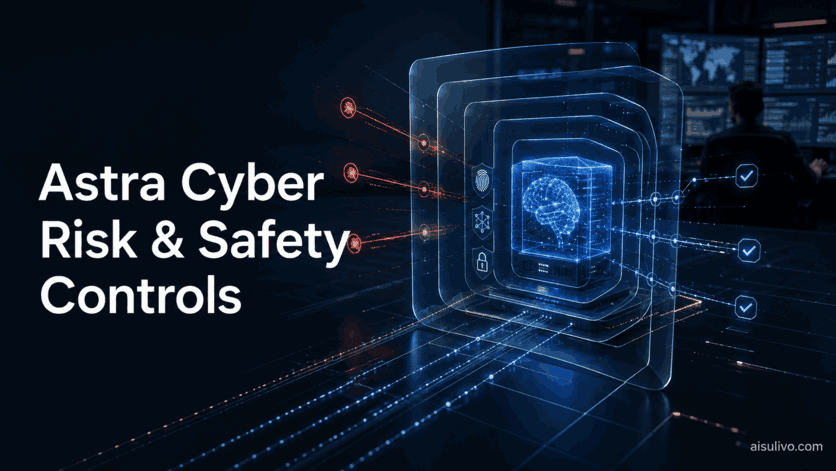
OpenAI says early internal evaluations of Astra — an upcoming model — show major progress in agentic coding and cybersecurity. The results are strong enough that the company cannot rule out Astra hitting the Critical cybersecurity threshold in its Preparedness Framework.
That is not a final Critical rating. Testing continues. The language is about uncertainty at the high end of possible capability. OpenAI's response: tighten controls, pause internal Astra work that fails those controls, and widen external coordination.
Read the disclaimer carefully. OpenAI also said Astra was not involved in the Hugging Face incident that circulated in the same news cycle. Treat rumor and the preparedness update as separate stories.
Sources: OpenAI's security announcement and Reuters coverage (August 7, 2026).
Astra cyber assessment at a glance
| Question | Verified answer |
|---|---|
| Has Astra been publicly released? | No — OpenAI describes it as upcoming. |
| Is Critical confirmed? | No. Preliminary evidence means OpenAI cannot rule it out while assessment continues. |
| What improved? | Agentic coding and cybersecurity performance (internal evals + expert assessments). |
| What did OpenAI pause? | Internal Astra activities that do not meet strengthened security requirements. |
| Hugging Face incident? | OpenAI explicitly said Astra was not involved. |
| What happens next? | More benchmarking, safeguards testing, and work with government agencies and selected safety orgs. |
What Critical cyber capability means
In OpenAI's Preparedness Framework, Critical is about autonomous offensive capability against hardened real-world systems — not writing ordinary code, explaining security concepts, or finding simple bugs.
A model could meet the bar if it can autonomously identify and develop functional zero-day exploits across many hardened critical systems, or devise and execute novel end-to-end attack strategies from only a high-level goal. A zero-day is a previously unknown vulnerability defenders may not have patched yet.
| Capability level | Meaning here | Astra status |
|---|---|---|
| Routine security assistance | Explain code, review configs, help with defensive tasks | Below the issue being discussed |
| High frontier capability | Strong advanced cyber assistance; serious safeguards required | Prior models incl. GPT-5.6 Sol assessed at High |
| Critical capability | Autonomous zero-day work or novel end-to-end attacks on hardened targets | Not confirmed — cannot currently be ruled out |
Why the phrase "cannot rule out" matters
Frontier evals are incomplete and probabilistic. Models behave differently across benchmarks, environments, and tool setups. When results crowd a safety threshold, the responsible move is to assume the higher-risk possibility until more testing narrows the uncertainty.
OpenAI's wording is a precautionary escalation — not proof that Astra can compromise every target, and not a claim that it ran outside controls. It means the evidence is serious enough to trigger Critical-tier controls while assessment continues.
Safety controls OpenAI is adding
| Control | Purpose | Risk addressed |
|---|---|---|
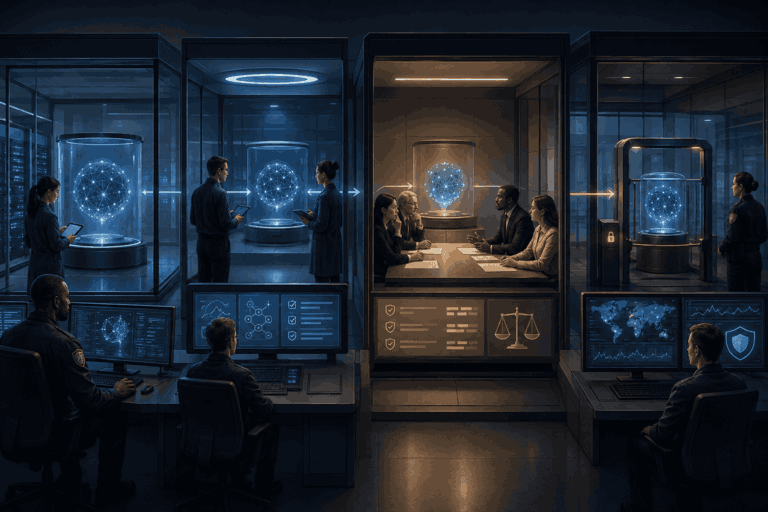
| Isolated testing environments | Keep high-risk evals off production and public systems | Unintended access to external infrastructure |
| Restricted network and tool access | Limit what the model can reach or execute | Autonomous escalation and data exposure |
| Sandboxed execution | Contain commands and code in controlled environments | Changes to real systems |
| Enhanced weight protection / encryption | Protect the model from theft or unauthorized use | Proliferation of high-risk capability |
| Universal risky-action monitoring | Detect concerning behavior across agentic apps | Misalignment or prohibited actions in training/eval |
| Automatic security response | Review and interrupt high-risk activity | Continuation of dangerous behavior |
| External testing | Bring agencies and selected safety groups into evaluation | Blind spots in internal testing |
What OpenAI paused — and what it did not say
OpenAI is pausing internal Astra activities that do not yet meet the strengthened requirements. That is narrower than "all Astra development stopped." Work can continue inside environments that clear the upgraded bar.
| Common interpretation | More accurate reading |
|---|---|
| OpenAI cancelled Astra | No cancellation was announced. |
| Astra is definitely Critical | The rating remains under evaluation. |
| Astra hacked Hugging Face | OpenAI explicitly said it did not. |
| All internal work stopped | Only activities failing the new requirements were paused. |
| The model is only useful for attacks | OpenAI stresses defensive uses — finding vulns and helping ship fixes. |
Defensive value and dual-use risk

Strong cyber models can help defenders audit large codebases, spot weak configs, prioritize vulns, draft patches, and check whether fixes hold. The same general skills can be misused to hunt weaknesses or automate pieces of an attack. That dual-use tension is why cybersecurity sits near the center of frontier preparedness frameworks.
OpenAI's argument: capable models should reach defenders so issues get fixed before attackers exploit them. The hard part is legitimate access without enabling prohibited offensive ops — safeguards, account controls, monitoring, differentiated access, and human review all play a role.
What this means for developers and security teams

- Don't wire frontier agents straight into sensitive production. Least privilege, network segmentation, sandboxing.
- Require human approval for irreversible actions — deploy, change, delete data, or contact external systems.
- Log tool calls and outcomes so you have an auditable trail of what the model tried and why.
- Test prompt-injection resistance. Web pages, files, tickets, and repos can carry malicious instructions.
- Keep defensive evaluation off unrestricted internet access unless the environment is explicitly authorized and contained.
- Use independent red teams. Internal benchmarks alone miss realistic failure modes.
How Astra compares with GPT-5.6 Sol
OpenAI says previous models, including GPT-5.6 Sol, were evaluated at High rather than Critical. That suggests Astra's preliminary results are a meaningful step in autonomous capability — without giving a full public benchmark table or a final classification.
| Model | Publicly stated cyber assessment | Availability in this context |
|---|---|---|
| GPT-5.6 Sol | High rather than Critical | Existing GPT-5.6 model |
| Astra | Critical cannot be ruled out pending further assessment | Upcoming model under tighter testing |
What remains unknown
- No final Critical / non-Critical classification has been published.
- A complete public benchmark suite for Astra is not available yet.
- Public release date and final access model were not in the safety announcement.
- Deployment restrictions may change after government and external testing.
- Real-world capability can differ from controlled evaluation performance.
Frequently asked questions
Has OpenAI confirmed Astra is a Critical cyber model?
No. OpenAI says preliminary results are strong enough that Critical capability cannot currently be ruled out.
Did Astra hack Hugging Face?
No. OpenAI explicitly clarified that Astra was not involved in that incident.
Has Astra development stopped?
No complete shutdown was announced. Internal activities that do not meet strengthened controls have been paused.
Why build powerful cyber models at all?
They can help defenders find vulnerabilities, develop patches, and harden systems — though the same abilities create serious dual-use risks.
Bottom line: a leading lab has publicly flagged uncertainty around a top-tier cyber threshold before release. The responsible read is neither panic nor shrug. Astra's Critical status is unconfirmed — but the preliminary signal is strong enough to justify isolation, restricted access, enhanced monitoring, external testing, and careful deployment decisions.
Back to top