
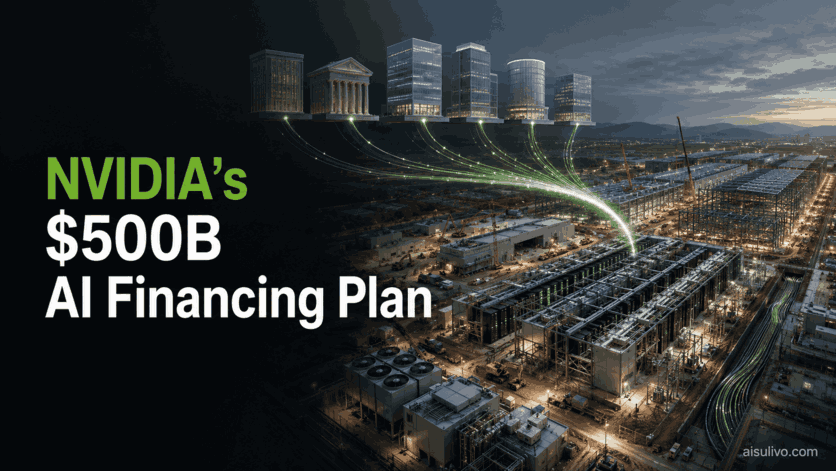

What was announced
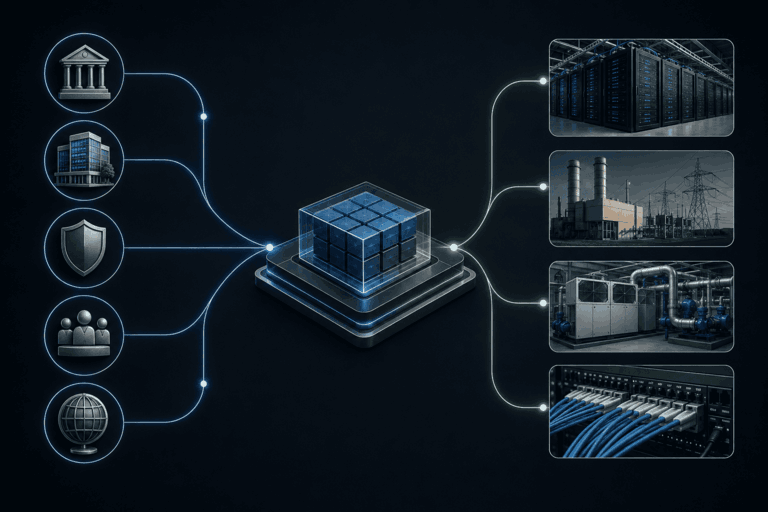
NVIDIA signed memorandums of understanding with Apollo, BlackRock, Blackstone, Brookfield, Goldman Sachs, and KKR to set up independent compute financing platforms. The stated goal: mobilize more than $500 billion of third-party capital over time for AI infrastructure — for frontier labs, enterprises, governments, cloud providers, and specialized AI clouds.
Huge number. Precise reading required. This is a capital-mobilization target, not money already invested. Partnerships still need final agreements. NVIDIA did not publish per-firm commitments or a deployment timetable in the announcement.
Headline hygiene: "NVIDIA raises $500B" is wrong. "NVIDIA and six institutions plan platforms that could mobilize over $500B over time" matches what was disclosed.
Sources: NVIDIA press release and Reuters (August 10, 2026).
NVIDIA financing plan at a glance
| Item | Verified detail | Important context |
|---|---|---|
| Target | More than $500 billion | Third-party capital to mobilize over time |
| Partners | Apollo, BlackRock, Blackstone, Brookfield, Goldman Sachs, KKR | Six major financial institutions |
| Structure | Independent compute financing platforms | Dedicated pools of capital |
| Legal stage | Memorandums of understanding | Final agreements still needed |
| Intended assets | NVIDIA compute + full-stack AI infrastructure | AI factory and data-center capacity |
| Timeline | Not disclosed | No detailed deployment schedule |
Who the six financial partners are
| Partner | Broad market role | Potential platform contribution |
|---|---|---|
| Apollo | Alternative asset management, long-duration capital | Flexible financing structures for infrastructure |
| BlackRock | Global asset management, institutional capital | Connect long-term investors to infrastructure assets |
| Blackstone | Alternatives, real estate, infrastructure | Large-scale data-center investment expertise |
| Brookfield | Global infrastructure and real assets | Development and financing of physical infrastructure |
| Goldman Sachs | IB, markets, asset management | Capital formation, distribution, credit markets |
| KKR | Private markets, infrastructure, credit | Long-duration capital and execution |
Exact economics and responsibilities depend on final agreements. The table describes each firm's broad capability — not contractual obligations NVIDIA has not published.
How compute financing platforms could work
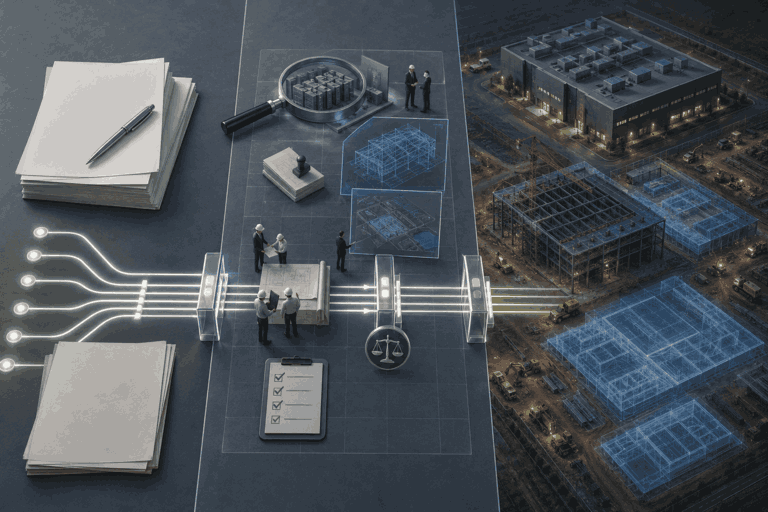
Training and serving advanced AI needs GPUs, networking, storage, cooling, power, land, and construction. Many customers need capacity before workloads produce steady revenue. A financing platform can pull long-term capital into that gap and treat compute infrastructure as an income-producing asset.
| Stage | What happens | Possible economic logic |
|---|---|---|
| 1. Capital formation | Institutions organize third-party capital pools | Investors want long-duration infrastructure exposure |
| 2. Asset buildout | Capital funds GPUs, networking, power, cooling, facilities | Spread large upfront costs over long operating periods |
| 3. Compute access | Labs, enterprises, governments, and clouds use capacity | Customers access compute without funding every asset |
| 4. Usage-linked revenue | Contracts or usage generate cash flow | Supports financing returns |
| 5. Ecosystem expansion | More NVIDIA systems deepen CUDA/software adoption | NVIDIA benefits via hardware and platform growth |
What NVIDIA means by AI factories
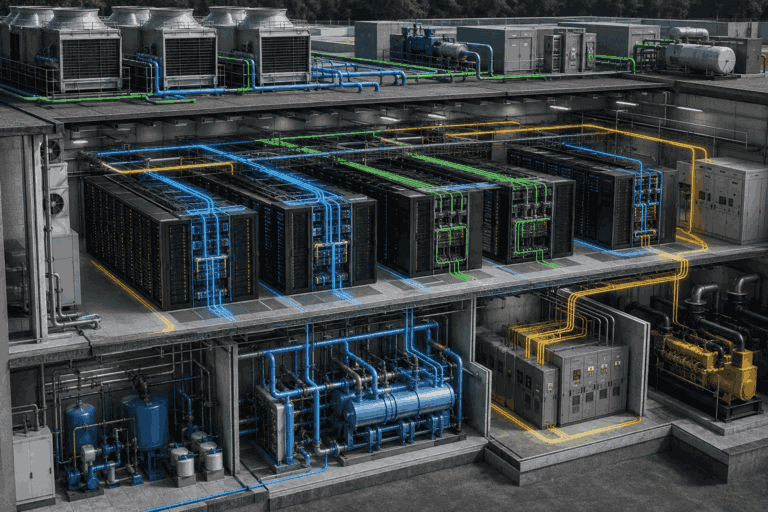
NVIDIA uses AI factory for infrastructure that turns data, electricity, and compute into outputs — tokens, predictions, models, automated services. The factory metaphor stresses continuous productive use, not a data center that only stores bits.
NVIDIA's strategic pitch: compute can become investable because it spans many models and workloads and keeps improving through the CUDA software ecosystem. Investors still have to underwrite utilization, hardware depreciation, energy costs, customer concentration, and technology risk.
Why more than $500 billion is a target — not a completed deal
| Claim | Status | Correct interpretation |
|---|---|---|
| NVIDIA received $500 billion | Incorrect | No completed transfer was announced |
| Partners will seek to mobilize over $500B | Correct | Announced long-term objective |
| Every firm committed an equal amount | Unsupported | Individual commitments were not disclosed |
| All projects are finalized | Incorrect | Still subject to final agreements |
| NVIDIA may provide financial support | Reported | Reuters: option to backstop up to $125B or 25% of potential deals |
The reported backstop option is not an immediate $125 billion spend. An option sets a possible ceiling; actual use depends on future transactions and agreements.
Who could benefit
- Frontier AI developers — large clusters without carrying the full infrastructure bill upfront.
- Enterprises — dedicated or contracted compute for proprietary systems.
- Cloud and AI cloud providers — capital to expand capacity as demand grows.
- Governments — financing routes for national or sovereign AI infrastructure.
- NVIDIA — a larger installed base for GPUs, networking, CUDA, and software.
- Institutional investors — potential long-duration, usage-linked infrastructure returns.
Strategic importance for NVIDIA
NVIDIA is not only selling chips — it is shaping how AI infrastructure gets funded, built, and operated. Easier financing means more customers can buy large NVIDIA-based systems, which can lift hardware demand and deepen reliance on NVIDIA networking, libraries, and developer tools.
The plan also tries to standardize compute as an asset class lenders and infrastructure investors can underwrite. That needs credible utilization contracts, predictable revenue, maintenance, and some path for transferable demand when customers change.
Major risks and open questions
| Risk | Why it matters | What to watch |
|---|---|---|
| Final agreement risk | MOUs can change before binding contracts | Signed funds, structures, legal terms |
| Utilization risk | Revenue needs customers actually using the compute | Long-term offtake and capacity contracts |
| Hardware depreciation | New accelerators can age older systems quickly | Upgrade cycles, resale, software support |
| Power constraints | Clusters need electricity and grid connections | Energy contracts, permits, construction timelines |
| Customer concentration | A few large AI buyers may drive most revenue | Tenant diversity and credit quality |
| Regulatory / community pushback | Data centers face water, land, noise, and grid concerns | Local approvals, environmental commitments, delays |
| Demand-cycle risk | AI spend may not grow forever at the same pace | Unit economics, token prices, enterprise adoption |
Potential impact on the AI market
If the platforms reach real scale, AI infrastructure could shift from pure balance-sheet purchases toward a financed, utility-like model. Smaller AI companies may reach clusters once reserved for the largest tech groups. Cloud capacity could expand faster. Governments could fund sovereign builds with private capital partners.
The flip side: more financial exposure to AI demand. Investors would be underwriting technology utilization, energy, hardware value, and customer credit. The AI cycle gets tied more tightly to private credit, infrastructure funds, and institutional portfolios.
Frequently asked questions
Has NVIDIA already raised $500 billion?
No. The partners aim to mobilize more than $500 billion of third-party capital over time.
Is the agreement final?
No. NVIDIA says the partnerships are based on memorandums of understanding and remain subject to final agreements.
What will the money finance?
The platforms are intended to support NVIDIA compute, full-stack AI infrastructure, and large AI factory or data-center deployments.
Did NVIDIA commit $125 billion?
Reuters reported an option to backstop up to $125 billion or 25% of potential deals — a possible ceiling, not a confirmed immediate investment.
Bottom line: NVIDIA wants to make AI compute investable at infrastructure scale. The size of the target shows how capital-intensive the buildout has become. The accurate headline is not that $500 billion has already been spent — it is that NVIDIA and six global financial institutions intend to create platforms capable of mobilizing that amount over time, subject to final contracts, market demand, and project execution.
Back to top